Looks Weird, Tastes Great

Yogurt is great way to get the active, good bacteria your body needs for your digestive tract. It’s a probiotic, which means “for life,” referring to living organisms that can result in a health benefit when eaten in adequate amounts. With that said, many yogurts are high in sugar and the ones that are low in sugar don’t taste good. Amanda’s father, also a health and fitness fanatic, created a low-sugar yogurt, oats, and fruit combination that is a tasty and helps to get things moving in your digestive tract.

Mark’s porridge:
7oz FAGE Total 0% Plain Greek Yogurt
1/4 Steel Cut Oats (Cook them)
1 cup frozen fruit (Blueberries, cherries, raspberries)
Drizzle some honey on top!

Optional additions:
Sprinkle some sliced almonds
1 Tablespoon chia seeds

Mix together and enjoy!

xoxo K&A

Classic AM Smoothie

Here is another one of our favorite green smoothies. It is a great one to start out with if you are just getting used to adding greens to the mix!

1 cup orange juice (trop50 if you want to cut calories!)
Handful of frozen strawberries
1/4 cup of frozen blueberries
1 serving size of cottage cheese or plain Greek yogurt
Handful of frozen spinach or kale

There are a ton of studies about using frozen versus fresh fruit, but honestly we have found that there is not THAT much of a difference. The bonus of using frozen is that you don’t have to use ice which keeps the flavors on par!

Hope you enjoy!
xoxo
K&A

Fasted cardio

Eating a snack an hour before a workout can give the fuel you need. However, fasted cardio can help you shed unwanted fat. The idea behind fasted cardio is that you’ll get up first thing in the morning and before eating your usual breakfast meal, you’ll head straight for the gym and get in a good 30-60 minutes of cardio first.

For fasted cardio your body is likely to uses its own fat to store fuel instead of the food you most recently ate, and those stored fats may be accessed faster. Therefore, fasted cardio will help you to lose more fast in your cardio session. Fasted cardio works because it helps you to become more efficient at using fat for fuel and because your hormones and metabolism are all in the perfect alignment.

First thing in the morning, after you’ve been fasting all night, your body’s natural level are optimal for fat loss. After not eating for about 10 hours, your insulin levels are very low. When insulin levels are low, your body is better able to release and transport fatty acids. In the morning, your circulating blood sugar is also low. Some people might think this is a bad thing, and it can be if it ends up impairing your cardio performance. However, if it doesn’t, low blood sugar forces your body to begin using stored fats for energy because there is not enough glucose to sustain your workout.

Fasted cardio is not good for everyone though. If you’re someone who hates morning workouts, or do not think you can exercise on an empty stomach, then this method of fat loss is unlikely to be beneficial for  you. For those who want to accelerate fat loss, or who have had a hard time getting rid of the last bit of fat, fasted cardio might just be the best technique to achieve your desired results. We have done fasted cardio in the past and we can say from firsthand experience that we saw some amazing changes in our bodies!

xoxo K&A
PB&J

Here’s one of our absolute favorite recipes for a meal replacement smoothie!
We call it the PB&J:

1 cup of soy/almond milk
1/4 cup of blueberries
1.5 tbs of peanut butter
1 tbs of chia seeds
1 handful of spinach or kale

We could literally eat these everyday. It tastes just like a PB&J sandwich, but better! Throw in some protein powder to sustain you longer.

xoxo
K&A

KNOWLEDGE IS POWER

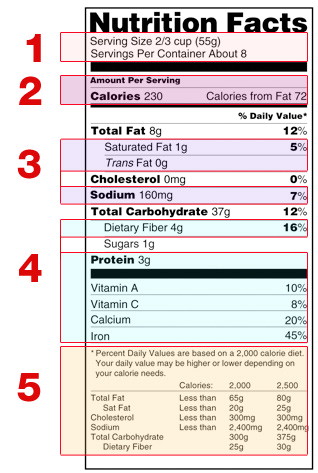
Trying to find the healthiest foods when grocery shopping can be complicated. A general rule of thumb is to shop around the perimeter the grocery store. When reading nutrition labels, it is imperative that you understand the different categories. Here are some tips to think largeabout next time you read a food label:

  1. This section will tell you the size of a single serving and the total number of servings per container (package). This is where companies can trick you. You might think a bottle of juice contains 150 calories, but if you look at the label, the bottle may contain two servings, so you’re really consuming 300 calories.
  2. Pay attention to the calories per serving and how many servings you’re really consuming if you eat the whole package. If you double the servings you eat, you double the calories and nutrients.
  3. Limit these nutrients.
    • For total fats you need about 56 to 78 grams a day and 16 grams of saturated fats. Stay away from trans fats. A product may say “0 grams of trans fat,” but there still may be .5 grams or less grams. The only way to be sure is to read the ingredients. Steer clear of foods that say “hydrogenated oil.”
    • Sodium aim to eat less than 1,500 mg of added sodium per day.
    • Carbs: Look at this number in relation to the list of ingredients. If the number is high but the ingredients include whole wheat and whole grains, it still gets the green light. On the other hand, if you see ingredients such as sugar or high fructose corn syrup, and this number is high, I’d put that product back on the shelf.
  4. Dietary fiber, protein, calcium, iron, vitamins and other nutrients you need every day.
    • Women need 25 to 35 grams of fiber per day so the higher this number the better.
    • You want to stay away from anything over 5 grams of sugar. Check out the ingredients and if you see things like sugar, brown sugar, or corn syrup, limit these foods.
    • The more protein the better. This will help you to stay full longer. Depending on your activity level, a woman needs between 40 and 60 grams of protein a day.
    • Some labels list the percentage of vitamin A, vitamin C, calcium, iron, etc. Aim to get 100 percent of these nutrients.
  5. The % Daily Value (DV) tells you the percentage of each nutrient in a single serving, in terms of the daily recommended amount. As a guide, if you want to consume less of a nutrient (such as saturated fat or sodium), choose foods with a lower % DV — 5 percent or less. If you want to consume more of a nutrient (such as fiber), seek foods with a higher % DV — 20 percent or more.
  6. INGREDIENTS: This is one of the most important aspects of the label. Look for real food ingredients (you can pronounce), and avoid enriched flour, hydrogenated oils, artificial flavors and colors, and refined sugars.

xoxo K&A