Wanderlust

Just because you are a wanderlust doesn’t mean you have to give up your bod! Working out while traveling or studying abroad can be challenging, but we have found that there are great alternatives to conventional routines or gym memberships.

Running definitely starts off the list. There is no greater way to explore a city than to cover a few extra miles on foot each day. You will find nooks and crannies that may be hidden from the tourists’ eyes. The best advice is to wake up early and head out before crowds start to appear.

If you don’t like running but still want to get your sweat on, Nike Training Club is a great alternative. NTC is an app withs tons of workouts that are catered to body weight training. Although sometimes the workouts recommend additional hand weights or medicine balls, the vast majority can be done without any equipment in a small space – even a hotel room. Additionally, the app categorizes the workouts: get lean, get strong, get toned, and get focused and offers 4 week programs of the aforementioned categories as well.

If you are a yogi or yogini that wants to practice but aren’t comfortable leading yourself, then checkout doyogawithme.com. There are tons of great videos that can be purchased and downloaded for a few dollars. Another great option if you want to do a flow in a hotel room! Personal favorite – Fiji McAlpine’s Power and Precision.

These are just a few of our favorite alternatives. Although it can be challenging, we promise you will feel better if you don’t skip workouts while traveling or abroad. Even if it’s just 20 minutes here and there, your body will thank you when you return home!

Happy travels and exploring!
xoxo K&A
KNOWLEDGE IS POWER

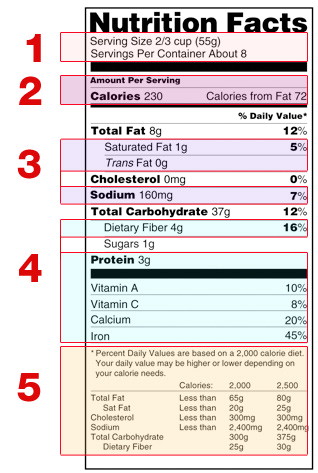
Trying to find the healthiest foods when grocery shopping can be complicated. A general rule of thumb is to shop around the perimeter the grocery store. When reading nutrition labels, it is imperative that you understand the different categories. Here are some tips to think largeabout next time you read a food label:

  1. This section will tell you the size of a single serving and the total number of servings per container (package). This is where companies can trick you. You might think a bottle of juice contains 150 calories, but if you look at the label, the bottle may contain two servings, so you’re really consuming 300 calories.
  2. Pay attention to the calories per serving and how many servings you’re really consuming if you eat the whole package. If you double the servings you eat, you double the calories and nutrients.
  3. Limit these nutrients.
    • For total fats you need about 56 to 78 grams a day and 16 grams of saturated fats. Stay away from trans fats. A product may say “0 grams of trans fat,” but there still may be .5 grams or less grams. The only way to be sure is to read the ingredients. Steer clear of foods that say “hydrogenated oil.”
    • Sodium aim to eat less than 1,500 mg of added sodium per day.
    • Carbs: Look at this number in relation to the list of ingredients. If the number is high but the ingredients include whole wheat and whole grains, it still gets the green light. On the other hand, if you see ingredients such as sugar or high fructose corn syrup, and this number is high, I’d put that product back on the shelf.
  4. Dietary fiber, protein, calcium, iron, vitamins and other nutrients you need every day.
    • Women need 25 to 35 grams of fiber per day so the higher this number the better.
    • You want to stay away from anything over 5 grams of sugar. Check out the ingredients and if you see things like sugar, brown sugar, or corn syrup, limit these foods.
    • The more protein the better. This will help you to stay full longer. Depending on your activity level, a woman needs between 40 and 60 grams of protein a day.
    • Some labels list the percentage of vitamin A, vitamin C, calcium, iron, etc. Aim to get 100 percent of these nutrients.
  5. The % Daily Value (DV) tells you the percentage of each nutrient in a single serving, in terms of the daily recommended amount. As a guide, if you want to consume less of a nutrient (such as saturated fat or sodium), choose foods with a lower % DV — 5 percent or less. If you want to consume more of a nutrient (such as fiber), seek foods with a higher % DV — 20 percent or more.
  6. INGREDIENTS: This is one of the most important aspects of the label. Look for real food ingredients (you can pronounce), and avoid enriched flour, hydrogenated oils, artificial flavors and colors, and refined sugars.

xoxo K&A

Inception

Since 2012, we have consistently worked together to establish a healthy lifestyle transparent in our physical appearances. As a result, family members, friends, and peers have asked for tips and tricks to success in the gym and at the grocery store. To more efficiently share with you all our “secrets,” we have decided to launch a blog centered around our lives as cross training athletes. We look forward to sharing with you all our favorite recipes, workout routines, and anything and everything else health and fitness related we can think of.

As dancers and members of the Elon Dance Company, health and fitness have become fields in which we are increasingly passionate. Although our schedules are always quite packed, we prioritize our health, knowing how it continues to reward us infinitely. We want to help you make this lifestyle a priority as well, so we promise you posts as often as we can to reference, encourage, and motivate you. Better your body, better yourself.

xoxo K&A